
Solar Farming in India 2026: Transforming Agriculture for Farmers
Learn how Indian farmers are embracing solar energy in 2026. PM KUSUM, solar-powered irrigation, and innovative agri-solar solutions are shaping a profitable and sustainable future.
3/20/20263 min read
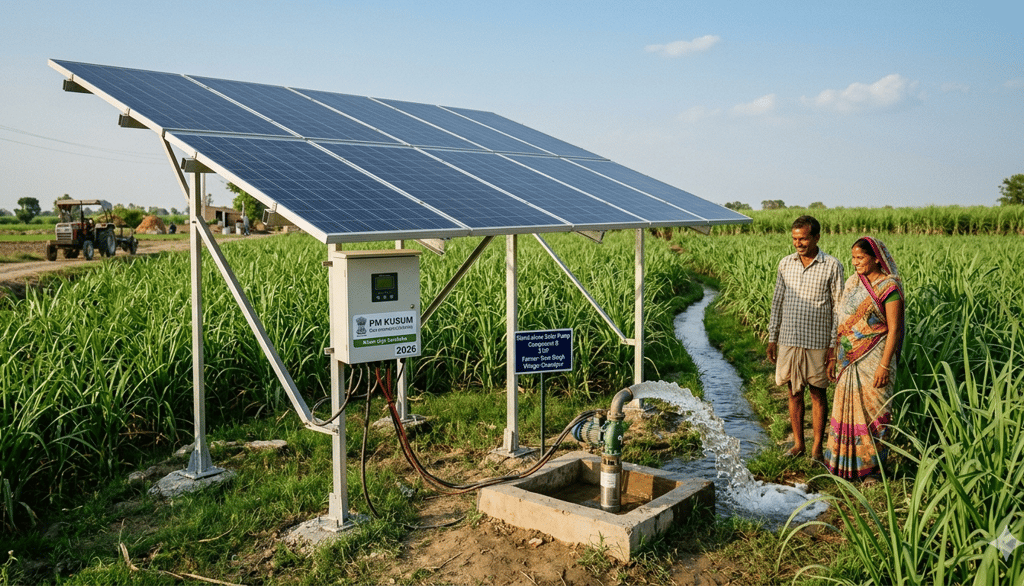
Agri-Solar Solutions for Indian Farmers in 2026 — PM KUSUM and Beyond
Agriculture Meets Solar — A Revolution in the Making
India’s agriculture sector is on the cusp of a transformative change. With approximately 140 million farm holdings across the country, a majority of farmers still rely on diesel pumps or the often unreliable electricity grid for irrigation. Rising fuel costs and erratic power supply make traditional irrigation expensive and inefficient.
Enter agri-solar solutions — the integration of solar energy into farming practices — which is steadily reshaping the landscape of Indian agriculture. By harnessing the sun’s power, farmers can reduce costs, increase crop yields, and even generate additional income. Supported by government initiatives like the PM KUSUM scheme and several state-level programs, solar energy is becoming a cornerstone of sustainable agriculture.
What is PM KUSUM?
The Pradhan Mantri Kisan Urja Suraksha evam Utthaan Mahabhiyan (PM KUSUM) is a flagship government program aimed at promoting solar energy in agriculture. The scheme has three primary components:
Standalone solar pumps for farmers to meet irrigation needs independently.
Solarisation of existing grid-connected pumps, allowing farmers to generate electricity for personal use and sell surplus to DISCOMs.
Small solar power plants on agricultural land to create additional revenue streams.
The government aims to add 30.8 GW of solar capacity through the agricultural sector by 2026, making it one of the largest agri-solar initiatives globally.
Types of Agri-Solar Solutions
Agri-solar is not limited to solar water pumps. Innovative solutions are emerging to meet various agricultural needs:
Solar Water Pumps (Standalone, 2–10 HP): Perfect for irrigation, these pumps eliminate the need for diesel and reduce recurring fuel costs.
Agrivoltaics: Dual-use of agricultural land for both farming and solar power generation. This approach maximizes land efficiency and income potential.
Solar-Powered Cold Storage: Enables post-harvest preservation, reducing crop losses due to spoilage.
Solar Drip and Sprinkler Irrigation Systems: Energy-efficient irrigation solutions that conserve water while improving yields.
Micro-Grids for Rural Agricultural Clusters: Community-level solar power solutions that ensure reliable electricity for multiple farms.
Benefits for Farmers
The impact of agri-solar solutions on farmers is significant:
Reduced Dependence on Diesel: Farmers save money on fuel while contributing to a cleaner environment.
Additional Income: Surplus electricity can be sold to local DISCOMs, providing an extra revenue stream.
Improved Water Management: Solar-powered pumps allow precise irrigation schedules, improving crop quality and yield.
Sustainable Farming: Clean energy solutions reduce carbon footprints and enhance the long-term viability of farming.
Business Opportunities in Agri-Solar
The growth of agri-solar solutions is creating a vibrant business ecosystem. Opportunities exist for:
Solar Pump Manufacturers: Supplying affordable, efficient pumps for irrigation.
EPC (Engineering, Procurement, Construction) Companies: Offering end-to-end solar installation services.
Rural Financiers: Providing loans or subsidies for solar adoption.
Agri-Tech Startups: Innovating on smart solar irrigation systems, monitoring tools, and agrivoltaics.
States like Uttar Pradesh, Rajasthan, Maharashtra, and Madhya Pradesh are emerging as the largest markets for agri-solar, with millions of farms yet to be solarised.
Challenges and How to Overcome Them
While the potential is huge, there are challenges to wide-scale adoption:
Farmer Awareness: Many farmers are unaware of available schemes and technologies.
Last-Mile Service: Installation, maintenance, and repairs require local support networks.
Financing: Upfront costs can be a barrier, even with subsidies.
Companies that provide end-to-end solutions — covering installation, financing, and maintenance — gain a competitive edge. Collaborating with Farmer-Producer Organisations (FPOs) and cooperative banks has proven highly effective in driving adoption.
Discover Agri-Solar Innovations at PowerPax India 2026
For those looking to explore the latest agri-solar solutions and business opportunities, PowerPax India 2026 at Greater Noida will be the hub of innovation. The expo will feature dedicated sections on rural energy and agricultural solar technology. Attendees can meet manufacturers, government representatives, and project developers driving India’s agri-solar revolution.
Whether you are a farmer looking to adopt solar, a startup exploring new ventures, or a business interested in the renewable sector, PowerPax India 2026 offers a platform to connect and learn.
Register now at powerpaxindia.com to secure your spot.
Conclusion
Agri-solar solutions for Indian farmers in 2026 are more than just a clean energy alternative; they are a pathway to sustainable, profitable, and resilient agriculture. With initiatives like PM KUSUM, increasing farmer awareness, and growing business opportunities, solar-powered agriculture is set to transform India’s rural economy in the coming years.
By embracing solar energy, Indian farmers can irrigate more efficiently, earn extra income, and contribute to a greener future — truly a revolution in the making.
Contact
Reach Out for other Information and Queries
Gaurav Dubey: +919818575520
Neha Chauhan: +91 7428 693331
Office Number : +91-120-162126
Office Number : +91-120-5163087
Tresub Media Pvt Ltd
Gaur City Mall 14th Floor
(Office No. 14130,14130-A), Sector-04 ,
Greater Noida West -201318,
Uttar Pradesh, India
Email ID : neha@renewablemirror.com
Web : www.renewablemirror.com/
© 2026. All rights reserved.
